




Something happens in our 40s and 50s. The skin care you’ve relied on for years may not work quite the same way. Changes in firmness and texture can become more noticeable. And beauty starts to feel less about trying everything new and more about figuring out what’s worth your time.
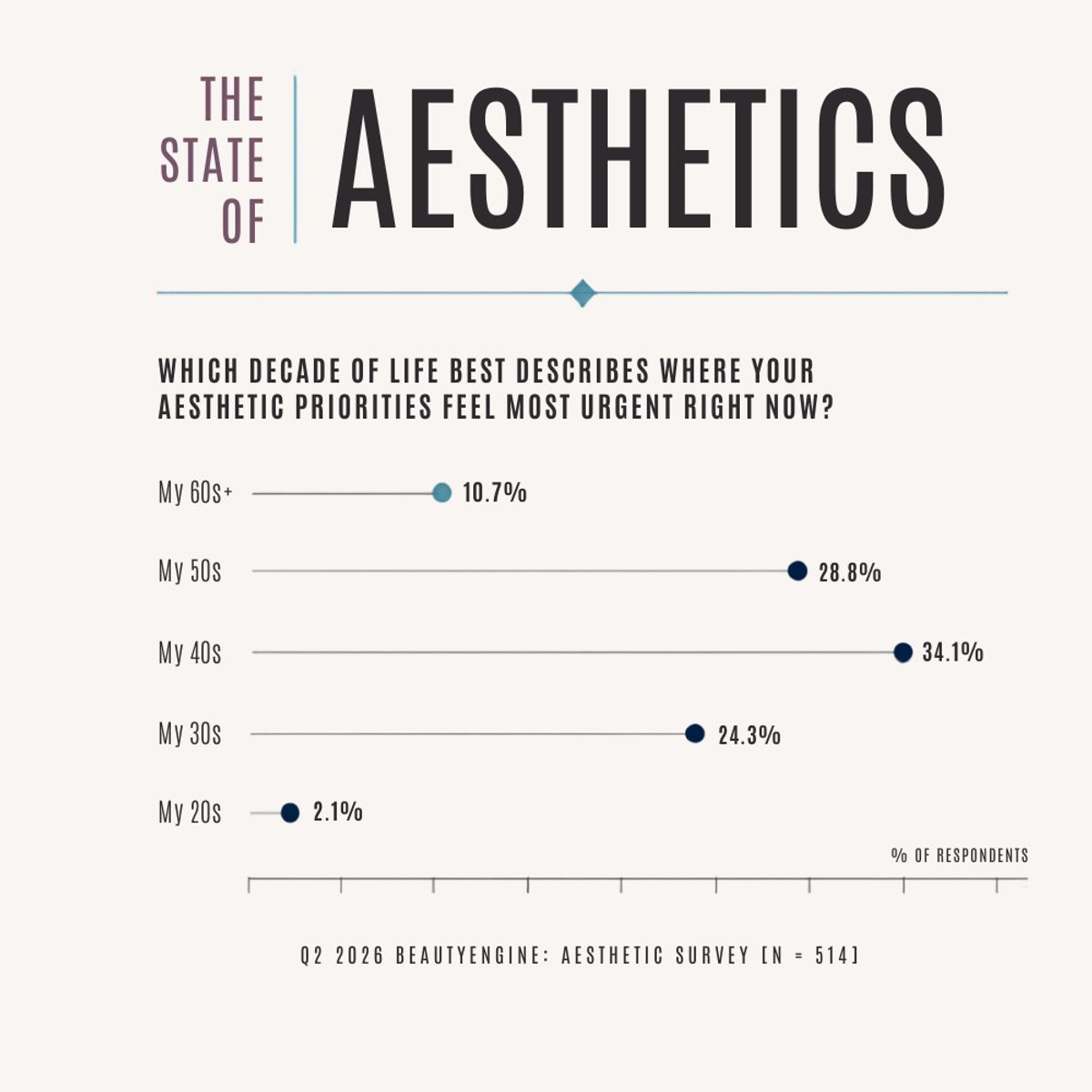
NewBeauty’s The State of Aesthetics Summer 2026 report found that aesthetic priorities peak during these decades. More than a third of respondents, 34.1 percent, say their 40s are when those priorities feel most urgent, followed by 28.8 percent who say their 50s. Only 7.2 percent say they want to age without any aesthetic help at all.
At the same time, menopause is becoming a bigger part of the beauty conversation, with women connecting changes in their skin to the hormonal shifts happening alongside them.
Menopause Has Entered the Beauty Aisle
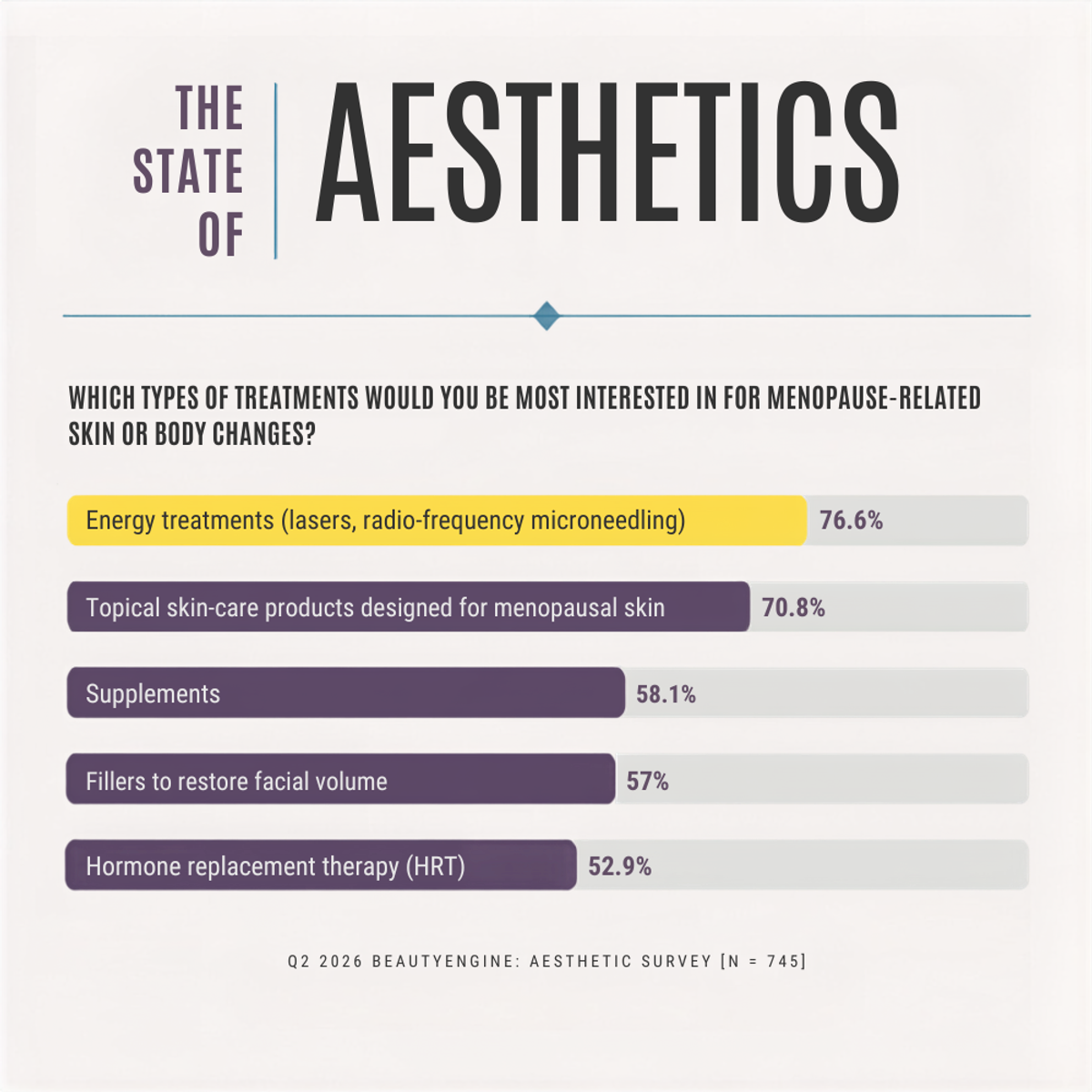
In the survey, 70.8 percent of respondents said they’re interested in topical skin-care products designed specifically for menopausal skin.
The concerns women bring to Miami dermatologist Anna Chacon, MD go well beyond wrinkles. She says the common concerns her patient’s have are dryness, crepey texture, thinning skin, laxity, sensitivity, volume loss and changes in hair density. Many also notice “that their skin no longer responds to the products and routines that worked for them in their 30s and 40s.”
There’s a physiological reason for that shift. “Estrogen plays a central role in maintaining skin collagen, hydration, thickness and resilience,” says Southlake, TX and Monroe, LA dermatologist Janine Hopkins, MD. “Menopausal skin requires a comprehensive approach, one that considers hormonal health alongside skin care and procedural treatments.”
That changing skin is also influencing what women want from their products. Dr. Chacon sees more interest in barrier repair, hydration, peptides, growth-factor technologies, antioxidants and strategic use of retinoids, particularly products that can address sensitivity and visible aging at the same time.
In-Office Treatments Are Becoming Regular Maintenance
Skin care wasn’t the most popular category in the survey. Energy-based treatments ranked even higher, with 76.6 percent interested in options like lasers and radio-frequency microneedling.
The interest is already showing up in doctors’ offices. Newport Beach, CA dermatologist Jennifer Channual, MD says menopausal women are becoming “much more proactive about preventing and treating skin aging,” particularly laxity, collagen loss, thinning skin and changes in facial structure. “Many patients want to delay or even avoid a surgical facelift, so they’re increasingly seeking noninvasive energy-based treatments that stimulate collagen and improve skin quality.”
For patients who aren’t ready for surgery, fitting treatments into everyday life is part of the appeal. “I still perform plenty of surgical facelifts, but many patients want results that fit into their lives, not the other way around,” says Concord, CA plastic surgeon Eric Mariotti, MD. “That’s why treatments with little to no downtime are so popular right now.”
New York dermatologist Erin Kil, MD sees high-intensity focused ultrasound treatments like Ultherapy and Sofwave leading the way for sagging skin, with fractionated CO₂ laser remaining popular for wrinkles and fine lines. “Perimenopausal and menopausal patients see examples of other women in their age group who look amazing and are thriving in their careers,” she says. “They believe these results are attainable through energy-based devices.”
It’s Not One-and-Done Anymore
The treatment plan itself is evolving, too. Instead of relying on one device to address everything, Dr. Channual says she’s seeing growing interest in combination approaches. “Patients understand that aging occurs at multiple levels of the face,” she says. In her practice, that can mean combining Sofwave for collagen remodeling and skin tightening with EMFACE to address muscle tone and support.
Vienna, VA dermatologist Brenda Dintiman, MD sees another kind of combination happening. Women may be managing dryness and hormonal breakouts with active skin care while also choosing treatments such as lasers and microneedling to stimulate collagen with minimal downtime.
We’ll Spend, But It Better Work
When respondents were asked what matters most when considering an aesthetic treatment for menopause-related changes, efficacy ranked first at 24.9 percent, ahead of cost at 22.2 percent and safety at 20.9 percent.
That finding sounds familiar to Louisville, KY dermatologist Tami Buss Cassis, MD, who says her patients are willing to invest in lasers and energy-based treatments, but they expect those treatments to deliver. “My patients will spend the money, but they won’t waste it,” she says.
Dr. Mariotti describes them as “seasoned consumers” who have already been through the trial-and-error phase. “They’ve already tried the trial-and-error route and they’re done with it,” he says. “Their patience for ‘maybe it will work’ is gone.”